
Critical theory in geography arose as an acknowledgment and critique of current society and structures, but it differs from previous types of theories in that it also sought to present improvements for society.
Criticisms of Quantitative Geography
Quantitative methods propelled the field of geography into becoming more rigorous and scientific, but the process of quantification involved the segregation of humans from data in geography. The field of geography was previously perceived as too humanistic, did not have repeatable or dependable methods, and lacked descriptive theories.
While spatial science was helpful in some ways, it also tried to explain social relations in pure spatial relation terms with a purposeful intent of removing the influence and impacts from and on humans. Critical theorists retorted with criticisms that spatial science created inaccurate conclusions since it removed the complexity of humans and attempted to reduce human interactions to simple laws.
Flavors of Critical Theory
Humanistic and Marxist geographies, developed after the spatial science and quantitative science revolution in geography, provided some of the first critical theories that not only addressed societal constructs but also sought to change them. Social issues were, for the first time, both described theoretically and given suggestions on improvement, and this new development in critical theory worked to connect humanism to quantitative geography. Feminist geography, postmodernism, and poststructuralism later continued the trend of intertwining geography theory with physical changes to society.
Marxist geography pushed for geographers to engage in more field work to not only gather information but to also offer aid. William Bunge and his office of geographers in Detroit is an example of this critical theory in play. The field of geography was altered by new aspirations to offer relevant research and to replace political neutrality with a reconnection of facts and values.
Feminist geography continued this progression of connecting facts and values but with a focus on facts and values from the perspective of women in a patriarchal system. Feminist geography also sought to provide relevant research, and it practiced the removal of neutrality with argumentative critiques of institutional frameworks. Feminist geographers sought to address social issues and improve them, just in a different light than Marxist geographers.
Modern, Postmodern, and Poststructural
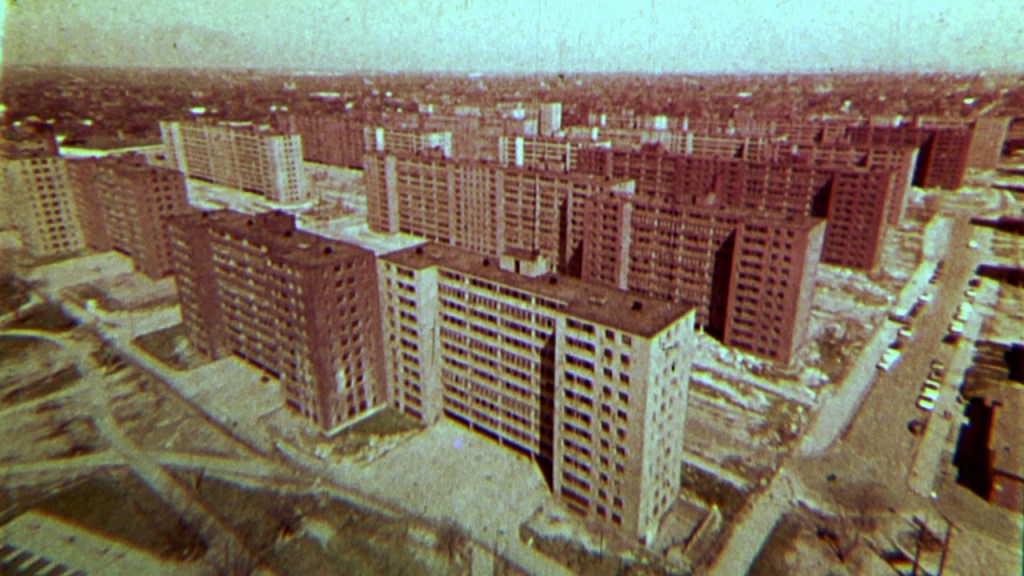
Modernist geographers sought to improve problems in the world by ascribing qualities to physical structures, such as the Pruitt-Igoe project. Modernist agendas were never quite fulfilled though, symbolized by the stark failure of the Pruitt-Igoe complex.
Postmodernist geographers took the same topic of physical space representing society but used it to understand and demonstrate human complexity. Postmodernists also influenced geographical research by presenting an alternative to overarching theories that demolished the existence of metanarratives, foundational Truths, and even essentialism of an object or idea. This critical theory pushed for new perspectives in geography, social theory, and the concept of space.
Poststructuralist critical theory similarly challenged basic assumptions in geography by eliminating concepts that certain structures straightforwardly determine aspects of social life. This critical theory changed geography by essentially ignoring the structures presented by all previous theories, including Marxist and feminism geographies, and suggesting that there are no clear categories for elements of life from which to create a deep, universal foundation of thought. In poststructuralist geography social issues are instead addressed through fluid surface relations instead of fixed and rigid deep processes.
All of these critical theories worked to reincorporate the influence and importance of humans into geographical research after the removal of human complexity during the quantitative geography revolution. Each theory presented new perspectives for ways to do this, and each one further broadened and developed the field of geography in diverging ways.
Want to know more?
- Bunge, W. W. (1962) Theoretical Geography, Royal University, Lund.
- Cresswell, T. (2013). Geographic thought: A critical introduction. Wiley-Blackwell, A John Wiley & Sons, Ltd.


