
Epistemology
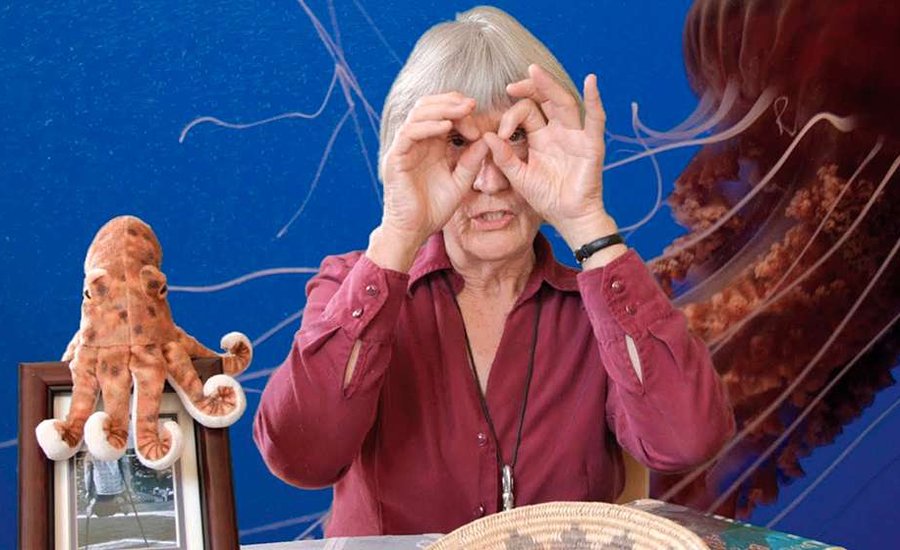
Feminist geography incorporates concepts of epistemology, or theories or knowledge, that provide new understandings about the world, particularly about quantitative geography. Quantitative geography is typically viewed as coming from an objective, unbiased, pure perspective. Any kind of quantitative research is treated with this assumption of a “view from nowhere” that allows non-subjective truth to be discovered. Part of the feminist epistemology in geography works to counteract this assumption. This is manifested in both the standpoint theory and the concept of situated knowledge, which were devised by Sandra Harding and Donna Haraway respectively.
The Standpoint Theory
The standpoint theory suggests that the “view from nowhere” does not exist in research. Instead, the theory emphasizes where the “view” originates from. The standpoint theory argues that traditional scientific knowledge has been gathered from the masculine position, so that knowledge is influenced by this position. The standpoint theory goes on to suggest that the knowledge obtained by a person is only valid or true for the position or standpoint of that person.
For example, the traditional masculine position has been used to gather a significant amount of information, but the standpoint theory purports that all of this information is only completely “true” for others with the same position. Furthermore, not all possible standpoints are treated equally. The masculine position, in particular, does not generally recognize other positions as valid suppliers of knowledge.
Situated Knowledge
Situated knowledge builds off of these concepts and adds on the notion that knowledge is context-specific, and the lack of this context may invalidate the information, or make it entirely erroneous. In other words, not all knowledge is neutral and universally applicable. Situated knowledge also abandons the “view from nowhere” and replaces it with more honed views.
Examples of situated knowledge include acknowledgment of political biases, privileged and relegated people and structures, cultural values, and gender in geographical inquiry. All in all, situated knowledge provides more accurate and realistic descriptions of information by recognizing the inherent perspectives of the researcher’s position and by acknowledging the context surrounding the information that provides insight on the information’s creation or use.
How is situated knowledge used in feminist geography?
The use of situated knowledge in feminist geography can be demonstrated by the topics of fear and crime, nature and the environment, movement and transportation, and the process of development. Fear and crime are experienced differently by men and women. Situated knowledge is created from this discrepancy in context.
Rachel Pain and Gill Valentine were feminist geographers that worked to the connections between women and fear and crime, particularly sexual violence, to issues of social control. Situated knowledge also crops up in geographical studies of mobility and movement, and it is tied to fear and crime.
While higher mobility may seem like a greater degree of freedom, feminist geography reveals that women view movement through a city, or other outside public space, as different from the familiar detachment such actions would provide a man. Women also incorporate mobility with household chores and childcare, so the impact of mobility on women changes with this understanding of the context around movement for each of the sexes.
In the topic of development and progress, women deal with a high percentage of unpaid work at home while also coming in last for the labor market hierarchy. Women contribute more to the global economy than they are given credit for. There are ties to postcolonialism and the desire for men to colonize and develop, whereas women are viewed as being colonized and being inherently underdeveloped. This contextual information creates situated knowledge that changes how development and progress can be observed and understood.
Feminist Geography and the Environment
Feminism is tied to nature and the environment through two prominent avenues, the first being what is called ecofeminism. Ecofeminism acknowledges the patriarchal views of women having a natural or more intimate connection to nature than men, but it attempts to subvert the negative patriarchal overtones by using the imagery of a deep connection to nature to critique treatment of women/s bodies and the unemotional, stoic, rational stereotypes of men.
The other side of feminist geography is a rejection of this patriarchal view with the intent to instead focus on patriarchal systems that control both the companies destroying the environment and those seeking to preserve it. The context around this situated knowledge highlights the unequal consequences of a damaged environment that women typically carry. Situated knowledge provides new insights and illustrates how one perspective of information does not describe every angle of experiences.
Want to know more?
- Cresswell, T. (2013). Geographic thought: A critical introduction. Wiley-Blackwell, A John Wiley & Sons, Ltd.
- Haraway, D. (1988). Situated knowledges: The science question in feminism and the privilege of partial perspective. Feminist Studies, 14(3), 575. https://doi.org/10.2307/3178066.
- Thompson, C. M. (2001). Situated knowledge: Feminist and science and technology studies perspectives. International Encyclopedia of the Social & Behavioral Sciences, 14129–14133. https://doi.org/10.1016/b0-08-043076-7/03159-4

 Kellie Gadeken