
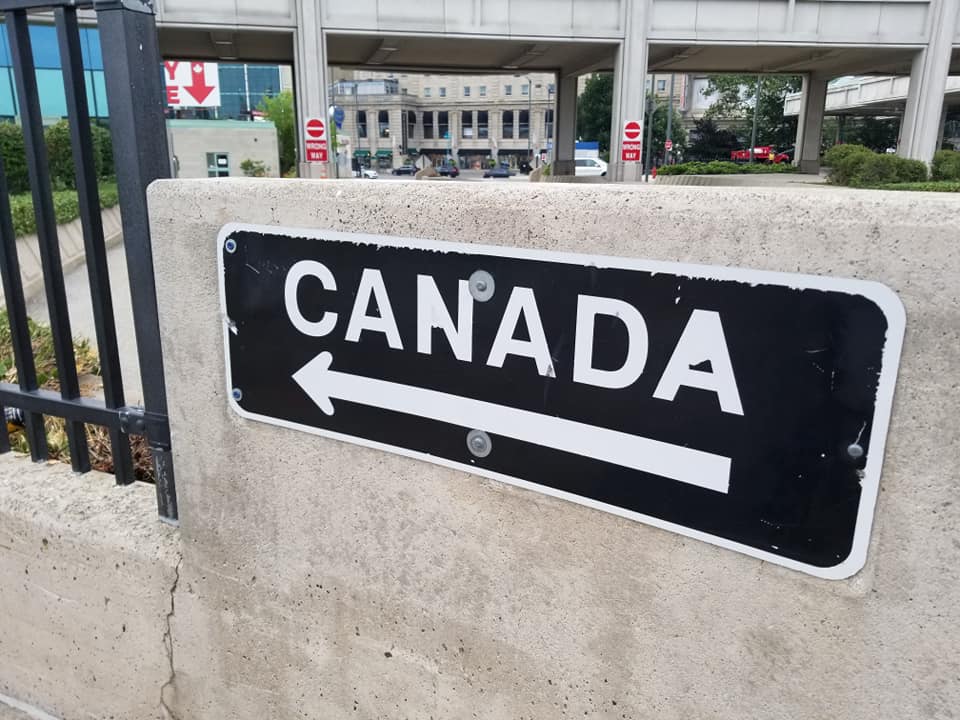
Quebec can be described as a formal region with clear boundaries and a distinct political identity, evidenced by its designation as one of 10 provinces within Canada. However, there are functional and vernacular regions defined within Quebec as well, such as the distinction between Northern Quebec and Southern Quebec, or the presence of a francophone core to separate French-speaking residents from other residents of Quebec.
Quebec is a very unique, multicultural region that encompasses many languages, cultures, and other differences. One homogeneous vernacular region distinction within Quebec revolves around the primary speaking language of residents. Following these geographic differences, the major groups of people who live in Canada and Quebec are defined by the Canadian census according to their language, territory, and ethnicity as either Francophones (French-speaking), Anglophones (English-speaking), or Allophones (those who speak a language other than French or English). Although French and English are the national languages, many native and aboriginal tribes have their own languages in addition to a scattering of languages spoken by immigrants.
Quebec History
This multiculturalism has roots in the French and English fur trading operations in Canada and the northern USA in the 1600’s and 1700’s, although each country’s traders utilized different approaches in their business practices. The French traders maintained closer and more collaborative relationships with indigenous peoples than the English did. The French formed strong alliances especially with the Algonquins and later the Hurons. The French desire to exploit the area’s furs and other resources was dependent on forging positive ties with the region’s first inhabitants who were more experienced hunters.
Quebec also developed uniquely due to the style and practices of settlers. Unlike the British system of settlement by individuals or families who settled in colonies, the French arrived primarily as explorers or settlers who were part of a feudal system dominated by the seigneurial system. These French settlers also divided land differently than their English counterparts. In order to ensure access to river transportation and equal access to the water from rivers, the French seigneurs developed a long lot system of land tenure.
Much of population growth in Quebec after 1700 was due to high birthrates rather than immigrant influx, unlike most English colonies. These examples illustrate how many of the foundational steps for the regional delineation of Quebec began with the colonizing practices of the French settlers. The major presence of Anglophones within Quebec and other parts of Canada is heavily tied to British victories in Quebec during the Seven Years War between France and Great Britain. The British were victorious in 1763, and France agreed to cede all of its North American territory to the British (including all First Nations land east of the Mississippi River), so all of northeastern North America fell under British control.
How has physical geography influenced Quebec?
The physical geography of Quebec has also contributed to its regional development. The extreme northerly location of much of Quebec makes this province susceptible to a long list of natural hazards such as snow and ice storms, flooding, and the alternating seasonal freezing and thawing of its surface soils and permafrost layers. The combination of poor soil, rugged terrain, and harsh climate has made much of Quebec unsuitable for agriculture.
However, there are many lakes and rivers left over from receding glacier activity around 10,000 years ago. This region’s many lakes and rivers, while impeding agriculture, have encouraged transportation. While there are many lakes and rivers in much of Quebec, other sections of the province are more mountainous. For example, southeastern Quebec and an area known as the Gaspé Peninsula are both part of the Appalachian Mountain chain. However, the presence of mountains does not impede river transportation in southeastern Quebec.
Southern Quebec is the social, economic, and political center of the Francophone region. Both the Canadian Shield and the Appalachian Mountains that are in Quebec are divided by the waters of the St. Lawrence River, a very large river that flows from southwest to northeast all the way across the province, and the two largest cities of the province, Montreal and Quebec City, are located at key sites along this river. Quebec City became Quebec’s administrative center, whereas Montreal, whose location allowed it to control access into the interior, became its financial and economic center.
Quebecois Nationalism
Both Montreal and Quebec City have intense francophone influence with a majority of Quebecois, or residents of Quebec, speaking French. There is some controversy among Quebecois due to the intense nationalism and French ethnic identity that separates it from the rest of Canada, which is primarily composed of Anglophones and Allophones compared to Quebec.
Many Quebecois see themselves as a distinct nation—that is, a group of people bound together by a common cultural heritage, language, and history within a place—relative to the rest of Canada. Specifically, the ethnic identity that separates Quebecois from the rest of Canada stems from French citizens’ own strong desire to remain Catholic and French, their high birthrates that ensured an ever-expanding population in a concentrated area of settlement, the institutional support of the Roman Catholic Church that provided them with educational and spiritual support, and the isolated rural lifestyle of the majority of the Francophones that separated them from Anglophone culture and influence.
Summarized, the “three pillars” of Quebecois nationalism are the French language, the Roman Catholic Church, and French legal and political traditions. Some modern events, such as the Richard Riot and the advancement of the Parti Quebecois (PQ) in Quebec’s parliament system, have spurred Quebecois nationalism. The success of the PQ reinforced the ethnic and political divisions between Quebec and the rest of Canada, and consequently many English speakers decided to leave Quebec and move to other parts of Canada. Although Quebec is delineated as a formal region within Canada, there are also many functional and vernacular distinctions within the province, such as language, historical identity, and religion, that separate it from other regions.
Want to know more?
- Hardwick, S.W., F.M. Shelley, and D.G. Holtgrieve. Chapter 6: Quebec, The Geography of North America (2nd ed.), Upper Saddle River, NJ: Pearson Prentice Hall, 2013 (p.109-127).

 Kellie Gadeken